Why You Still Need a Pool Guy in the Winter (Yes, Even in Arizona)
Every December I get some version of the same text: “It’s 65 degrees out. Can we skip a few weeks and save some cash?” Fair question. I’d probably ask it too. But the honest answer is no — not because I want your money, but because I’ve watched what “just a few skipped weeks” turns into by April.
Here’s the catch with Arizona winter pool maintenance: our winters are mild, and that’s exactly what makes them sneaky. Nothing freezes. Nothing visibly breaks. So the pool sits there looking fine while a slow, quiet list of problems stacks up underneath the surface. By the time the water turns, people are shocked. I’m not — I can usually tell you which skipped item did it.
So let me walk you through what actually still needs doing in Mesa and across the East Valley, and why.
Your Pool Doesn’t Take the Winter Off
In colder states, pools get closed and covered for months. Yours doesn’t. Our water rarely drops low enough to matter, so your pump, filter, and plumbing keep running straight through January. That’s the whole point — and the whole risk.
Circulation is what moves sanitizer through the water and pushes debris toward the skimmer. Filtration is what traps the fine stuff. Run them less consistently and you get dead zones where water sits still, sanitizer thins out, and algae finds a quiet corner to start. Year-round circulation and filtration isn’t a sales line — it’s the difference between a pool that stays clear on its own and one that needs rescue in spring.
Less Chlorine, Not Less Testing
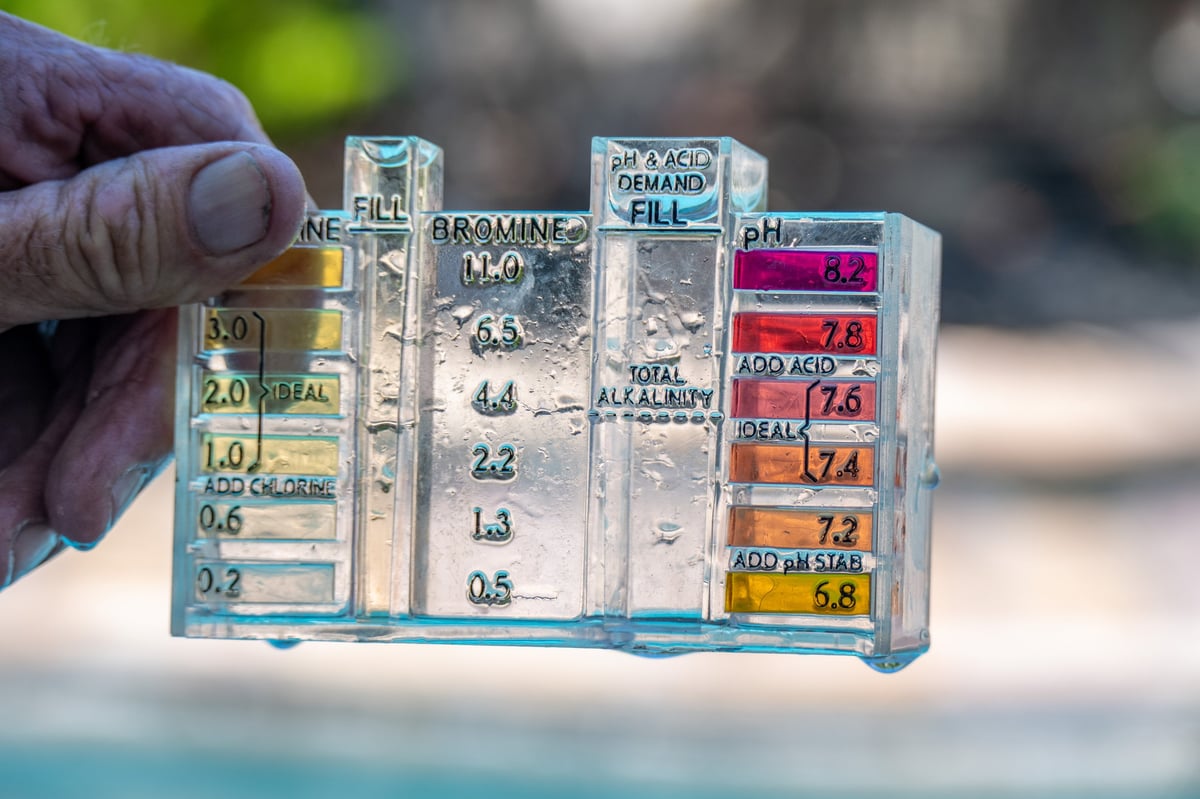
Cold water burns through chlorine more slowly, so yes, your pool needs less of it in winter. Homeowners hear that and stop testing. That’s the mistake. Less chlorine demand is not zero demand.
Water still gets dirty. Algae still grows, just slower. Dust and pollen still blow in. Rain still shifts your pH and alkalinity. If nobody tests, everything looks fine right up until it doesn’t — and a chemistry problem that could’ve been a ten-minute fix in January becomes a multi-visit recovery in April. Winter testing is cheap insurance. For a closer look at what a weekly chemistry check covers, we wrote it up in detail.
Leaves, Dust, and the Baskets You Forget About
Winter in the East Valley is leaf season. Ficus, palm, and mesquite drop debris, and our winter dust storms push grit straight into the pool. A clogged skimmer basket can’t skim. A clogged pump basket starves the pump and forces it to work harder and hotter — one of the fastest ways to turn a cheap basket cleaning into an expensive pump repair.
Emptying baskets sounds trivial. It’s the small habit that protects the single most costly piece of equipment you own.
Equipment Inspection Is the Real Winter Win
Winter is when good pool service earns its keep, because it’s when we can spot trouble before it becomes an emergency. Loose pump seals, brittle O-rings, sticking valves, rising filter pressure, a timer that’s drifted off schedule — these are all things you find quietly in January and painfully in July.
Preventive maintenance in a calm month is always cheaper than a repair during swim season. That’s not a pitch. That’s just how pool equipment works — and it’s what our equipment inspections are built around.
Setting the Pool Up for the Warm-Up
Come April and May, the Valley heats up fast. Pools that were “fine” all winter suddenly can’t keep up: the water warms, chlorine burns off quicker, and any chemistry imbalance that was lurking gets exposed.
A good winter maintenance plan ends with the pool already balanced and ready. When the first hot weekend hits, you’re swimming — not scrubbing a green pool and waiting on a filter.
Why Good Pool Service Changes With the Season
This is the part I wish more people understood: a pool isn’t a static checklist. It’s a living system reacting to temperature, sun, debris, and rain. Your pool doesn’t need the same attention in January that it needs in July. But it still needs the right attention.
That’s the whole job, really. Test, investigate, explain, and do what the pool actually needs right now — not what a generic schedule says. It’s the same approach behind our weekly pool service.
FAQ: Winter Pool Care in Mesa and the East Valley
Do I really need service every week in winter?
Not always. It depends on your pool, your trees, and how it’s holding chemistry. What you shouldn’t do is stop entirely — most pools still need a regular visit, just with a lighter touch.
Can’t I just run the pump less and call it good?
Running the pump less is fine on some systems, but only if someone’s still checking the water and the baskets. Less runtime plus zero testing is how pools quietly go south.
What if my pool looks clean all winter?
Clear water isn’t the same as balanced water. Algae and scale problems often start invisible. Testing catches what your eyes can’t.
Is winter service cheaper?
Sometimes lighter, but it’s not a discount season — it’s a preventive one. Catching a $150 problem in January beats a $1,500 repair in June.
The Bottom Line
If you want to keep your pool healthy through the cool months without thinking about it, that’s exactly what we’re here for. We adapt the visit to the season, tell you honestly what we did and why, and keep your water ready for the day you actually want to use it.
Wondering what your pool needs this winter? Reach out and we’ll take a look — no guesswork, no upsell.